SaaS Product
Design
Products people open every day and do not want to leave. We design your SaaS from the first flow to a full design system, and build it when you need us to.
What you get
Scope you can defend
Who the product is for, what the first version must do and what can wait. A plan your investors and your team can agree on, before money goes into the build.
Every screen, not only the hero shots
Onboarding, dashboards, settings, billing, empty states. Every screen a real customer meets, designed so they keep using the product and keep paying for it.
A design system that saves months
Components, themes and documented rules, so a new feature takes hours to design, not weeks, and the product stays consistent as it grows.
Design and build under one roof
The web app, a native iPhone app and the marketing site around them, built by the team that designed them. No hand off where quality gets lost.
AI where it earns its place
Features your customers feel: plain language input, smart planning, summaries, and connectors that let customers use your product from their AI assistant.
A studio that runs its own SaaS
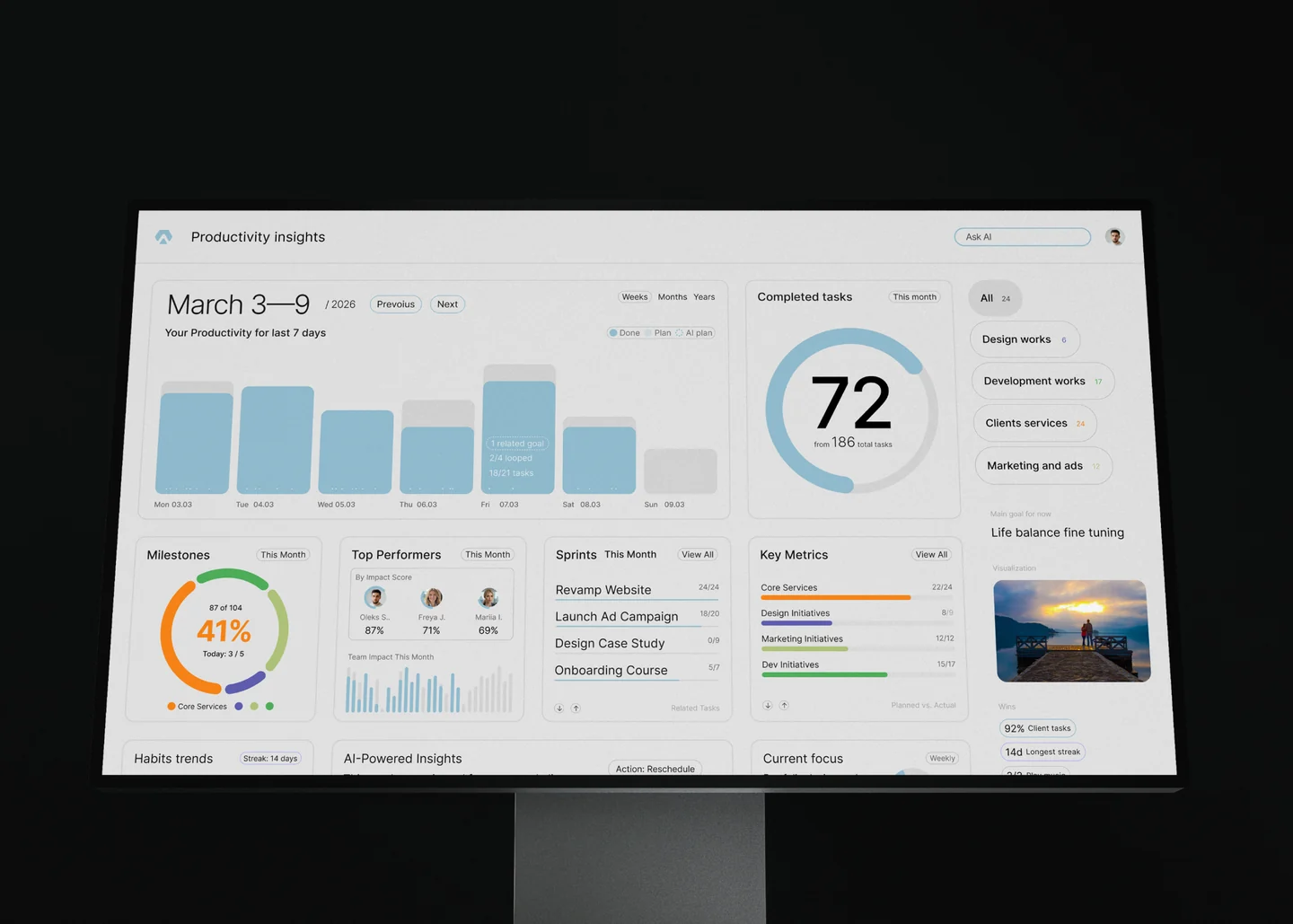
We are not only designers for hire. Aimgod, our own productivity product, is live on the web and in the App Store, designed, built and run by us. We know what it takes to ship, to support real users and to grow, and we look at your product with the same owner's eye.
Aimgod runs on the web for desktop and phone and as a native iPhone app: four sections in one product, three desktop layouts. With no ad budget at all, about 7 percent of people who sign up keep using it, those who stay open it on about every second day, and every one of them also plans through their AI assistant.
You work directly with the founder of the studio. One person accountable from the first call to launch, fast decisions, nothing lost in a chain of managers.
How a SaaS project starts
The first week is about understanding. We study the product and what has already been built, then the market: direct competitors and the tools your customers use around you.
The week usually ends with a concept of the main screen, most often the dashboard, or the landing page when the product needs growth. You see the direction before you commit to the whole project, and that concept then scales to every page.
Dashboards and complex interfaces
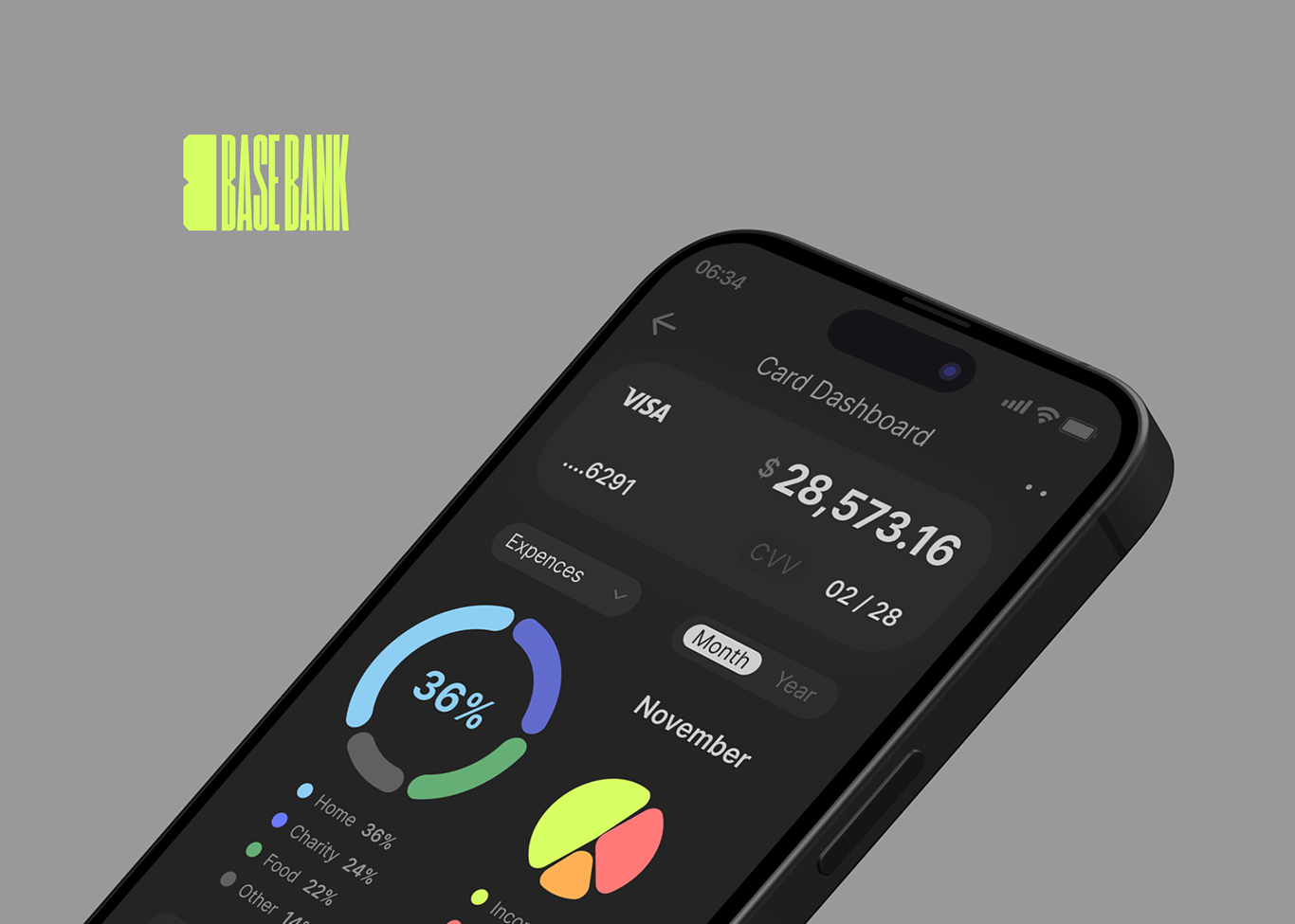
A landing page has one job and one button. A product screen can hold forty actions: add, edit, filter, assign, export. The work is to arrange them so everything is easy to find and nothing jumps at the user at once.
We start from the outcome. What must the customer walk away with? From that answer comes the hierarchy: primary functions first, secondary ones a step away, rare tools hidden until called.
In practice
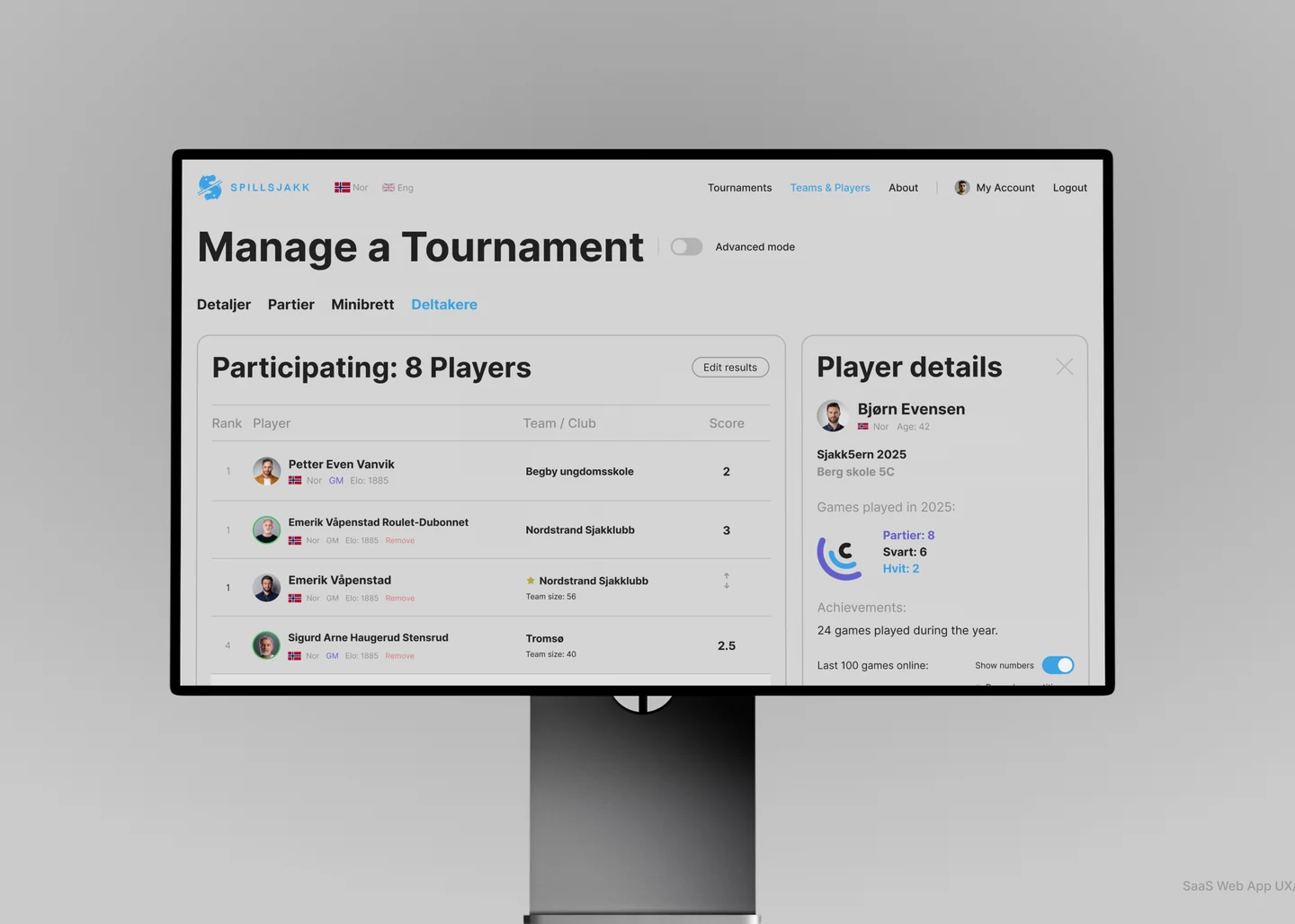
For the Norwegian Chess Federation we designed Spillsjakk, a platform of more than 150 screens and five user roles. Five pages of the old interface became one: collapsible lists, a card for each player with the full history, one click from player to player. Faster to use and far easier to understand.
Aimgod is built on three layers of focus: thoughts worth keeping for life, goals for the month and the year, and today's tasks tied to those goals. Any part works on its own, and firm rules appear only where they help. Setting a time takes two taps.
Related work
Why Creayou
A boutique studio for SaaS design and development. A few people, decades in the craft and a real love for the work.
Design first
Design is where we started. Every project leaves with a custom design that looks expensive and stays in memory, with motion and micro interactions crafted by hand.
Never the same twice
Many studios reuse one proven layout for every client. Each of our projects gets its own structure, navigation and visual language, built around who buys and why.
Meaning over feature lists
Pages and integrations are easy to produce today. What makes a product sell is a clear picture of the buyer, information in the right order and taste in every detail.
One lead from brief to launch
The founder who designs your product also writes the brief, talks with you and leads the build. Nothing gets lost between sales, design and development.
A little more than asked
Along the way we suggest what else could work for your business, so you leave with a sharper view of what to do next.
How we work
Discover
Long conversations with you, your current site, your competitors. We write down the goals and today's numbers, conversion included, so there is a baseline to beat.
Moodboard
A hand picked board of the best sites in the world that fit your audience, style and colors. We agree on the direction before any screen is drawn.
Concept
Two or three directions for the key page, usually the home page or the dashboard. You choose one, and it sets the language for everything else.
Design
Every page and every state, desktop and mobile, built on one system so new pages come together fast.
Build
Fast, clean code for the site, the product or the phone app. Motion and speed are treated as part of the design.
Test
Automated tests plus hands on checks on real phones, laptops and desktops, until it feels right everywhere.
Launch
You approve, we hand over every account, file and right, with written and video guides for your team.
Grow
Search Console, analytics, SEO, ads if needed, a monthly report with the numbers, blog posts from your material. Monthly, yearly or on request.
Questions
Who do you work with best?
Founders and small teams of three to five people who already have customers and are ready to invest in growth: a new product design, a stronger site, ads and search.
How much does an MVP cost?
Every MVP is quoted after a short call, because scope decides the price. You receive a fixed proposal with scope, timeline and price in writing. Usually one to two months from the first sketches to a working product.
Do you work with early stage startups?
Yes. Many projects start as an idea and a deck. We help shape the MVP so it ships fast and still looks like a company worth trusting.
Can you redesign a product that is already live?
Yes. We start with an audit of the current product and its numbers, then improve it screen by screen without stopping your releases.
Do you hand off to our developers?
Yes. You get a documented design system and specs. We stay available while your team builds, or we build it ourselves.
How long does it take?
An MVP design usually takes four to eight weeks. A full design system for a mature product takes longer. We agree on milestones before we start.
What technology do you build on?
Modern, proven technology chosen for speed, security and easy hiring later, the same stack our own product runs on. We go through the details on a call, once we know what your product needs.
Who owns the work?
You do. Every design file, account, line of code and right is yours at the end of the project.
How do you use AI?
Design is handcrafted: ideas, flows, interface and every detail are decided by people. AI does the repetitive engineering, so projects ship faster and the time saved goes into polish.
Got a project?
[email protected]