Web app development
From a working MVP to a product people pay for. Next.js, React and Supabase, with design and logic in one team and senior engineers where experience matters.
What you get
Design and logic
Screens, flows and the rules behind them come from the same people, so the product works the way it looks.
Modern stack
Next.js, React, TypeScript, Tailwind and Supabase on Vercel. Payments with Paddle or Stripe, email with Resend.
Senior engineering
Project setup, the stack choice and a security review handled by experienced developers on the team.
Web and iPhone on one backend
When the product needs a native app, it shares the same data and accounts with the web version.
Who does what
Design and product logic stay in one pair of hands, together with most of the day to day build. That is why the product behaves the way it was designed, without the usual loss between a mockup and the code.
Senior developers on the team take what needs deep experience: setting up the project, choosing the right technologies and reviewing security before launch.
In practice
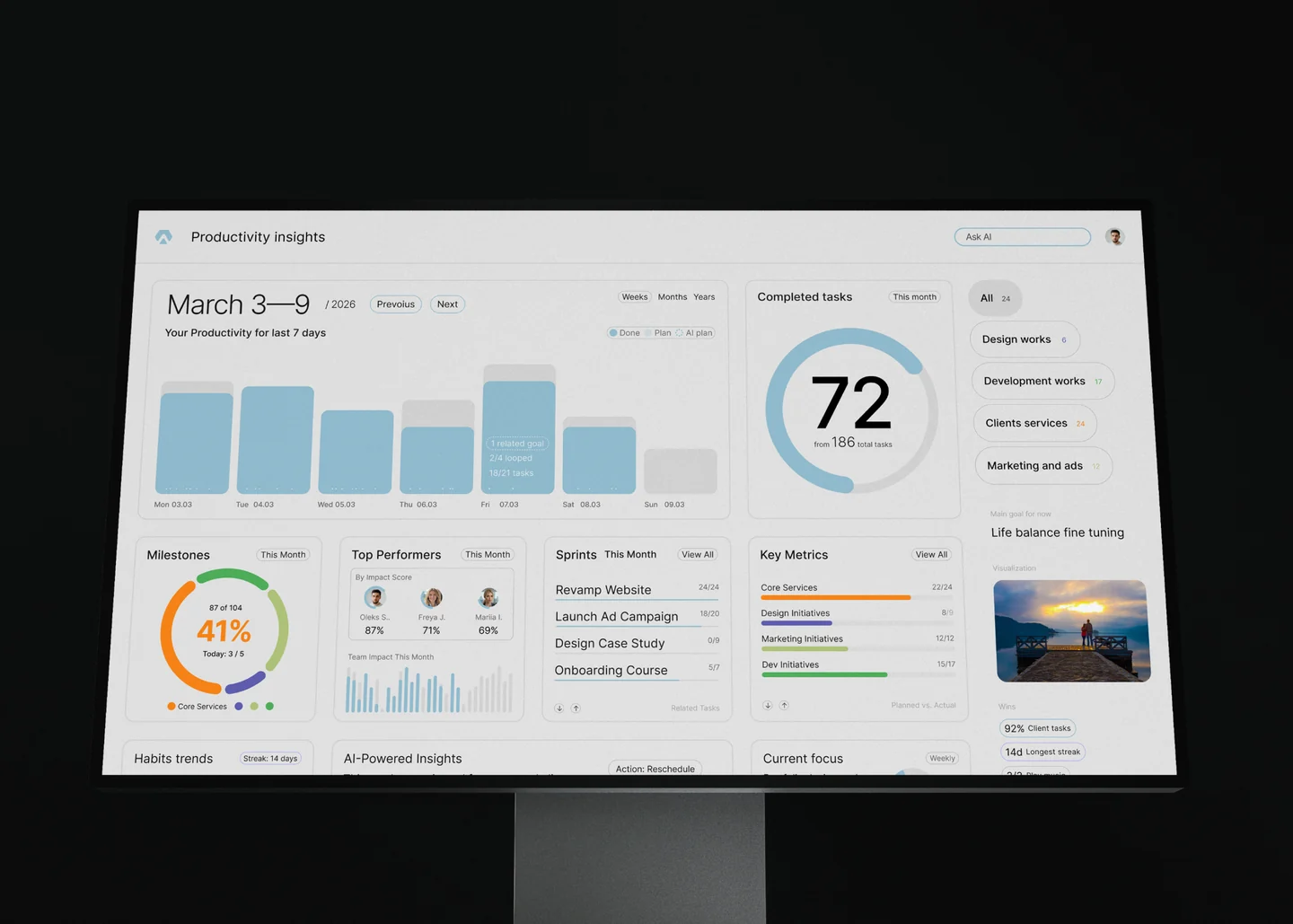
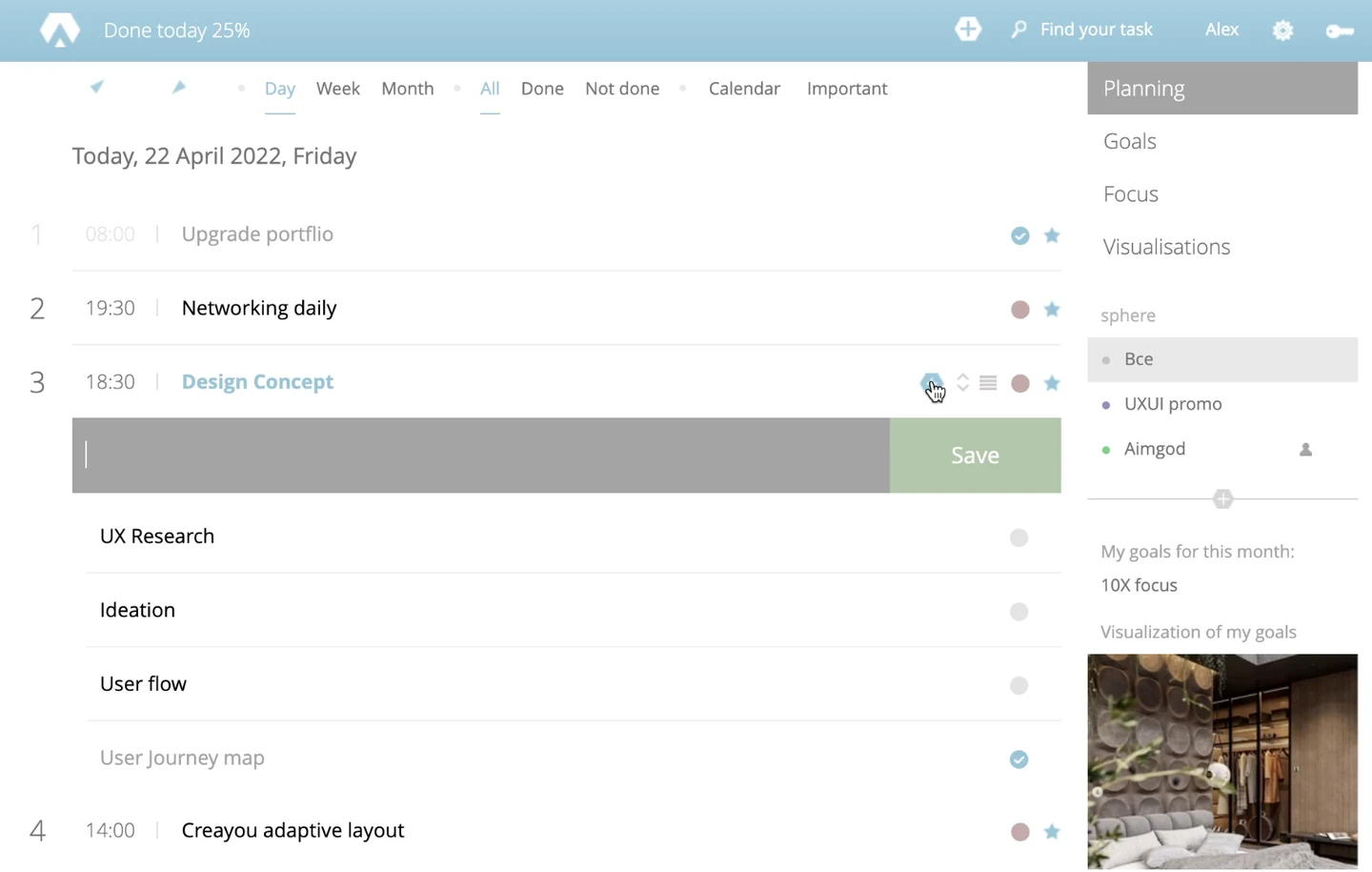
Aimgod is a full stack web app on Next.js and Supabase: planning, goals, focus, a productivity dashboard, AI features on Claude and an MCP connector. Its native iPhone app runs on the same backend. The first version of Aimgod, in 2017, was also designed and built by us.
Related work
Why Creayou
A boutique studio for SaaS design and development. A few people, decades in the craft and a real love for the work.
Design first
Design is where we started, 22 years ago. Every project leaves with a custom design that looks expensive and stays in memory, with motion and micro interactions crafted by hand.
Never the same twice
Many studios reuse one proven layout for every client. Each of our projects gets its own structure, navigation and visual language, built around who buys and why.
Meaning over feature lists
Pages and integrations are easy to produce today. What makes a product sell is a clear picture of the buyer, information in the right order and taste in every detail.
One lead from brief to launch
The founder who designs your product also writes the brief, talks with you and leads the build. Nothing gets lost between sales, design and development.
A little more than asked
Along the way we suggest what else could work for your business, so you leave with a sharper view of what to do next.
How we work
Discover
Long conversations with you, your current site, your competitors. We write down the goals and today's numbers, conversion included, so there is a baseline to beat.
Moodboard
A hand picked board of the best sites in the world that fit your audience, style and colors. We agree on the direction before any screen is drawn.
Concept
Two or three directions for the key page, usually the home page or the dashboard. You choose one, and it sets the language for everything else.
Design
Every page and every state, desktop and mobile, built on one system so new pages come together fast.
Build
Webflow for marketing sites, Next.js or React for products, native iOS when the product lives on the phone. AI assisted with Claude Code, motion and speed treated as part of the design.
Test
Automated tests plus hands on checks on real phones, laptops and desktops, until it feels right everywhere.
Launch
You approve, we hand over every account, file and right, with written and video guides for your team.
Grow
Search Console, analytics, SEO, ads if needed, a monthly report with the numbers, blog posts from your material. Monthly, yearly or on request.
Questions
How much does an MVP cost?
From $10,000, usually one to two months from the first sketches to a working product.
Can you take over an existing codebase?
Yes. We start with a review of the code and the product, then improve it without stopping your releases.
Do you build the backend?
Yes. Database, auth, API and payments, usually on Supabase, or on your existing backend.
Will we own the code?
Yes. Everything lives in your repositories and accounts from the first day.
How do you use AI?
Design is handcrafted: ideas, flows, interface and every detail are decided by people. AI does the repetitive engineering. We build with Claude Code, use it to systematize design tokens, write tests and check builds against platform guidelines, so projects ship faster and the time saved goes into polish.